
21st Oct 2026
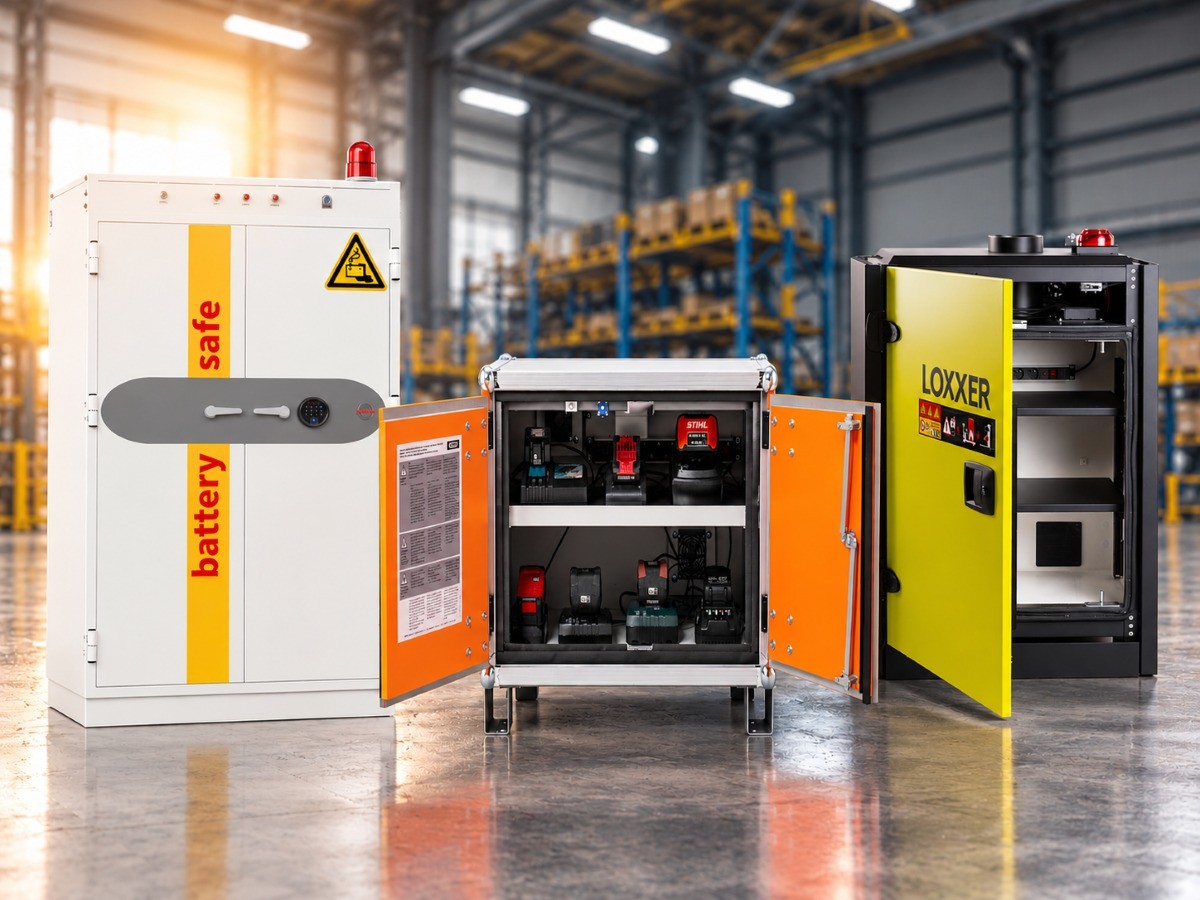
As lithium-ion battery use grows, so does the focus on safer charging and storage.
Find out what developing safety standards and changing expectations could mean for businesses using lithium-ion batteries in the workplace.
What Could Change for Lithium-Ion Battery Charging and Storage in the Future?
Using lithium-ion batteries as part of daily work processes has become the norm. However, risk management and safety for charging and storage has grown alongside this. It is important for companies to manage these risks.
As the use of battery powered equipment in the workplace increases, the need for suitable battery storage and charging areas has increased as well and it is an area where standards are starting to catch up.
There is also growing attention on how battery storage and charging cabinets are tested, particularly when it comes to the risks associated with thermal runaway and fire when it comes to lithium-ion batteries.
Although there is currently no confirmed new UK law requiring every business to install or use a particular type or standard of lithium-ion battery cabinet by a set date, standards development is underway. The British Standards Institution has a project relating to fire-protection storage cabinets for lithium-ion batteries in the event of thermal runaway, with a provisional publication timeline extending into 2028.
The final requirements and timeline may change, and a developing standard does not automatically become a legal requirement.
However, it does raise an important question for businesses: is your current battery storage and charging equipment suitable for the risks involved, and will it stand up to closer scrutiny in the future?
Waiting for a specific deadline before reviewing your setup might not be the best approach. However, understanding safety standards and choosing equipment with appropriate testing evidence could help businesses prepare for changing expectations.
Why Are Workplace Battery Storage and Charging Rules Being Reviewed?
Lithium-ion batteries are used across a wide range of workplaces, from warehouses and manufacturing facilities to workshops, construction sites and maintenance departments.
Charging batteries has become an everyday activity, the norm in busy environments. But the risks involved can’t and shouldn't be overlooked.
If a lithium-ion battery develops a fault, it can overheat and enter a process known as thermal runaway. This can lead to fire, a release of flammable gases and, in some circumstances, an intense fire that’s difficult to control.
This is one reason why the performance of battery storage and charging cabinets deserves careful consideration.
Cabinets described as fire resistant are often tested by a fire that originates outside the cabinet. This often leaves questions on how a cabinet would perform in other fire situations, such as a fire caused by a battery inside the cabinet experiencing thermal runaway.
This is important for businesses because they need to understand what their equipment has been tested to withstand, and not just take general descriptions or claims at face value.
As testing methods develop and expectations around battery safety evolve, having clear evidence of a cabinet's performance becomes a vital part of the purchasing decision.
What Are the Current UK Rules for Charging and Storing Batteries?
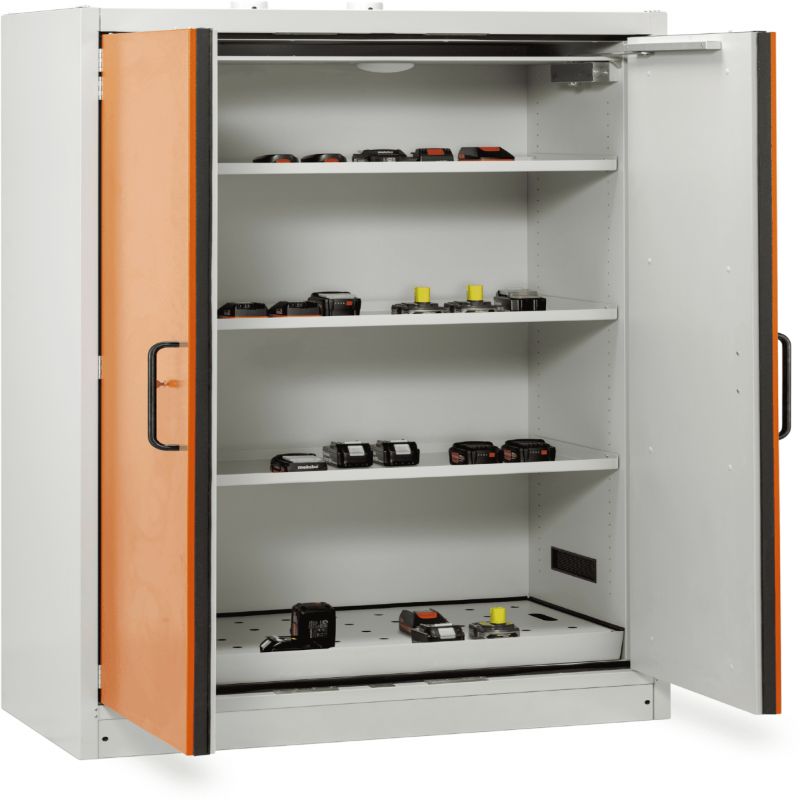
There isn't one single UK regulation that requires every workplace storing or charging lithium-ion batteries to use a specific cabinet.
Instead, businesses need to consider the risks associated with their activities and the legal requirements that apply to their premises and operations.
For example, the Regulatory Reform (Fire Safety) Order 2005 in England and Wales requires the responsible person to carry out a suitable and sufficient fire risk assessment and implement appropriate fire safety measures.
Other legislation may also be relevant, depending on circumstances. This includes the Health and Safety at Work etc. Act 1974, the Electricity at Work Regulations 1989 and, where applicable, the Dangerous Substances and Explosive Atmospheres Regulations 2002 (DSEAR).
But what does this mean in practice?
Businesses should consider where batteries are stored and charged, how many are kept on site, the condition of the batteries, the charging arrangements and what measures are in place if a fault occurs.
The requirements can also differ depending on whether batteries are being stored for everyday use, charged overnight, or held as damaged or end-of-life waste.
There’s no substitute for assessing the risks that are specific to your workplace. Simply purchasing a fire-resistant cabinet doesn't automatically make your battery storage or charging arrangement compliant.
The equipment needs to be suitable for the application and supported by appropriate procedures, installation arrangements and staff awareness.
What New Fire Safety Requirements Could Be Introduced?
These developing standards are worth watching to be ready for potential changes.
The British Standards Institution has a project on the testing of requirements for fire protection of storage cabinets for lithium-ion batteries to contain thermal runaway. Their published timeline indicates potential publication in 2028, but this could still change.
This is the development of standards, not the confirmation of new laws on this date.
The VDMA 24994:2024-08 standard sheet is also already relevant to the discussion. It addresses the testing of fire protection storage cabinets for lithium-ion batteries and includes a test for thermal runaway which occurs inside the cabinet.
For companies comparing battery charging cabinets, this shows an important distinction between general fire resistance and a battery fire occurring within the cabinet.
When reviewing a cabinet, it’s worth asking:
- What standard has the cabinet been tested against?
- Does the evidence cover a fire originating inside the cabinet?
- Is there a formal certificate, a test report, or both?
- Which specific model and configuration are covered by the evidence?
- What battery capacity and operating conditions are permitted?
These questions can help businesses make a more informed decision today, regardless of how future legislation or standards ultimately develop.
Could Fire-Resistant Battery Cabinets Become More Important?
Fire-resistant lithium-ion battery charging cabinets already have an important role to play in workplace arrangements. As attention increases around thermal runaway testing, the evidence behind a cabinet's performance deserves just as much, if not more consideration as its features.
This is where VDMA 24994 becomes particularly relevant.
When a manufacturer states that a cabinet has been tested or certified to VDMA 24994, it is important to understand exactly what that means for the cabinet or model being considered.
Testing and certification are not interchangeable terms. A test report records the results of testing, while certification provides a formal confirmation within the scope of the relevant certification scheme. The precise evidence available can vary between products and versions.
Businesses should check the documentation for the specific cabinet they intend to purchase, rather than assume that every model in a product range carries the same certification.
Other factors need to be considered too. The quantity and capacity of the batteries being charged, the number of chargers required, available space, electrical requirements and the cabinet's monitoring and safety features should all form part of a selection process.
The aim isn't to find a cabinet with the right label, but to choose equipment that is appropriate for the batteries, the application and the risks identified on site.
Should Businesses Future-Proof Their Battery Storage Now?
With standards continuing to develop and battery safety receiving greater attention, now is a sensible time to review your existing arrangements.
This doesn't mean replacing equipment unnecessarily or making purchasing decisions based on rumours about future legislation. It means understanding what you currently have, identifying any gaps and considering whether a new cabinet would offer a more suitable level of protection.
A review could include checking your fire risk assessment, confirming that batteries are being charged in accordance with the manufacturer's instructions, reviewing the condition and quantity of batteries on site, and checking the test documentation for your current storage equipment.
If you're investing in a new lithium-ion battery charging cabinet, it is also worth looking beyond the immediate requirement. Consider the level of testing and certification available, the capacity you need today, and whether the cabinet will remain suitable as your operation changes or grows.
Choosing equipment with appropriate, documented test evidence may help prepare for evolving standards and expectations. Although it can’t guarantee compliance with future requirements that have not yet been finalised, it does give you a more informed starting point.
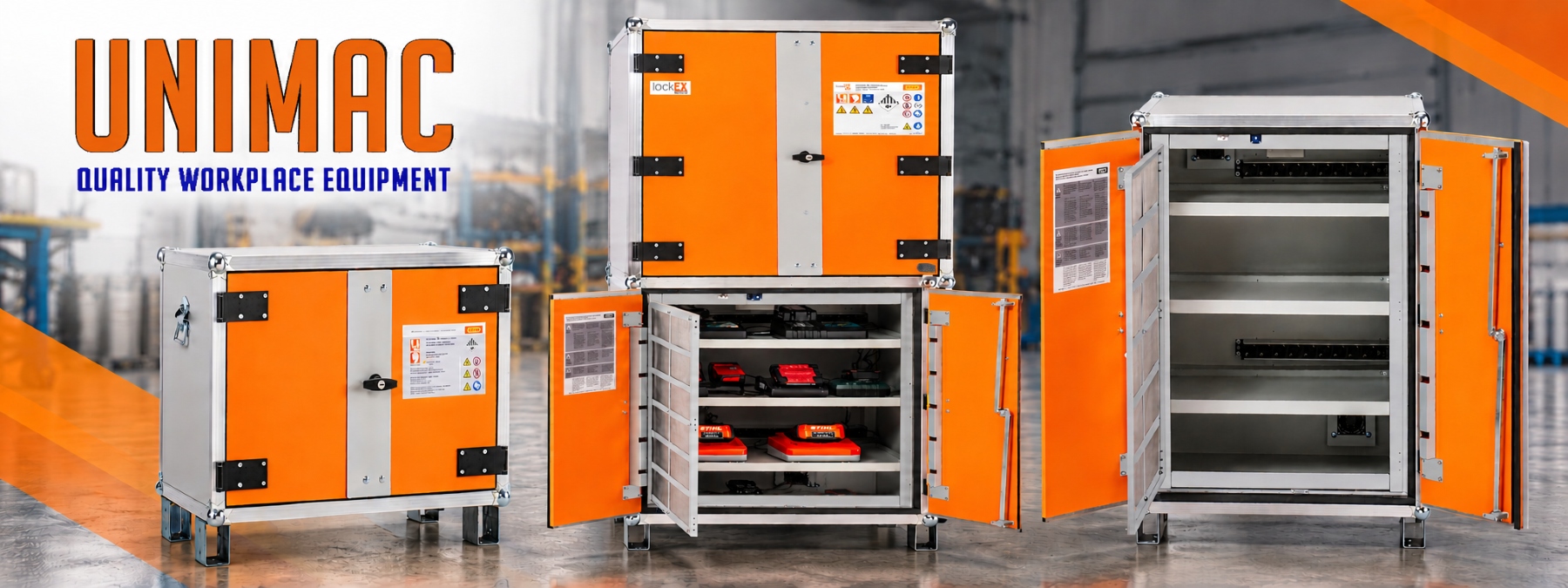
How Unimac can help with lithium-ion battery storage and charging
At Unimac, we supply lithium-ion battery storage and charging cabinets from manufacturers such as CEMO, including the lockEX range.
These cabinets are designed specifically for the storage and charging of lithium-ion batteries, with features that vary by model and configuration. Depending on the version selected, these include the patented lockEX pressure-relief system, charging shutdown in response to a malfunction or thermal runaway, and options for monitoring and integration with wider safety systems.
The range includes different cabinet sizes to suit different applications.
The CEMO lockEX 8/10 is a useful starting point for businesses looking for a mid-sized storage and charging cabinet. Its specification lists a battery capacity of up to 6 kWh, with single-phase and three-phase options available depending on the configuration.
Importantly, the testing and certification status should be checked against the exact version being considered. The LockEX range includes models with VDMA 24994 test evidence and certified versions, so it is worth confirming the relevant documentation before making your decision.
Find out more about the CEMO lockEX 8/10 battery storage and charging cabinet or browse our full range of lithium-ion battery charging cabinets. If it’s just storage you’re looking for, check out our Lithium-ion battery storage range.
If you're reviewing your current setup or planning a new installation, our team can help you compare the available options and identify a cabinet suited to your requirements.
You don't need to wait for a new regulation to be announced before taking battery safety seriously, and the existing standards like VDMA 24994 already give you a clear benchmark to work from. Understanding the risks, reviewing your current equipment and looking for credible testing evidence are sensible steps you can take now.